

If you’ve ever found yourself craving a snack that’s both hearty and full of flavor, you’re going to love this Homemade Scotch Eggs with Fresh Herbs Recipe. I absolutely love how these turn out—crispy on the outside, juicy and tender inside with that lovely herb hit that makes each bite so satisfying. When I first tried making these at home, I used fresh herbs and it totally transformed the flavor from your typical supermarket version. Keep reading, and I’ll walk you through each step so you can nail this recipe with ease in your own kitchen.
Why You’ll Love This Recipe
- Fresh Herb Flavor: Using fresh chives and thyme adds a bright, fragrant twist that really elevates the traditional Scotch egg.
- Perfect Texture: The combination of panko breadcrumbs and careful frying makes your eggs crispy outside and perfectly soft inside every time.
- Quick and Fun: This recipe takes less than 30 minutes and is actually fun to assemble—makes for great weekend cooking with friends or family.
- Reliable Results: I’ve tested this method multiple times and the tips I share here will help you avoid common pitfalls for a foolproof outcome.

Ingredients You’ll Need
Choosing quality ingredients is key for this Homemade Scotch Eggs with Fresh Herbs Recipe—the freshness of your eggs and herbs really shines through. I recommend grabbing fresh herbs from the market or your garden, and using good-quality sausagemeat for the juiciest pockets of flavor.
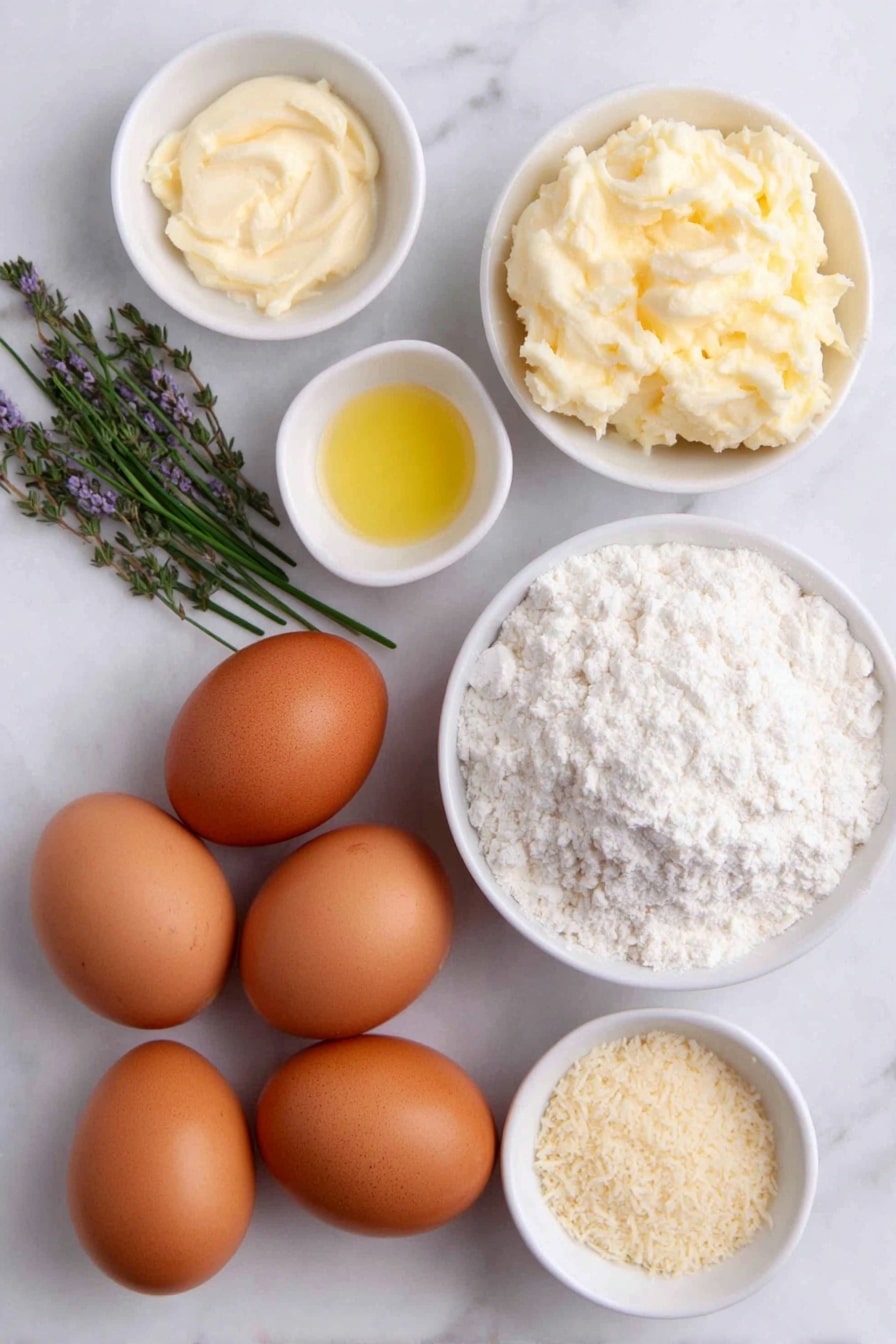
- Eggs: Use fresh eggs for boiling and also for your coating process to get that perfect golden crust.
- Plain sausagemeat: This forms the savory meat layer; opting for high-quality, well-seasoned sausagemeat makes a big difference.
- Mixed fresh herbs (chives and thyme): I love these two because they add subtle but lively flavor without overwhelming the dish.
- Ground mace: A pinch adds a warm, aromatic hint that’s a little unexpected and lovely.
- English mustard: Gives a gentle tang and helps bind the meat mixture beautifully.
- Milk: Just a splash to help bind the egg wash easily.
- Flour: All-purpose flour works well for dusting and helps the meat stick.
- Panko or homemade breadcrumbs: Panko gives a lighter, crispier crust, but homemade breadcrumbs work great too.
- Vegetable oil: For frying; pick a neutral oil with a high smoke point like sunflower or canola.
Variations
I love making this recipe my own depending on what’s in the fridge or to suit different moods. Feel free to swap out the herbs or add spices that you like. You’ll find giving this recipe a little personal twist keeps things exciting!
- Herb Swap: I once tried adding rosemary and parsley instead of chives and thyme, which added a piney, fresh note that my family went crazy for.
- Spicy Kick: Adding a pinch of smoked paprika or cayenne powder to the sausagemeat really wakes up the flavors, perfect if you enjoy heat.
- Vegetarian Version: Try substituting meat with a mixture of mashed chickpeas, herbs, and breadcrumbs for a fun and filling meat-free alternative.
- Oven-Baked: If you want a lighter version, bake instead of frying—just brush the coated eggs with oil and bake at 400°F until golden.
How to Make Homemade Scotch Eggs with Fresh Herbs Recipe
Step 1: Perfectly Soft-Boil the Eggs
Start by gently placing six eggs in a pan, covering them with cold water, and bringing to a boil. Once boiling, reduce the heat to a simmer and cook for 5 minutes exactly for that luscious soft center. The trick I discovered is to immediately transfer them to an iced water bath to stop cooking—helps with peeling later and gives a clean, polished look to your Scotch eggs.
Step 2: Mix Your Herb-Seasoned Sausage
While the eggs cool, toss your sausagemeat, chopped herbs, ground mace, and English mustard into a bowl. Sprinkle some salt and pepper and then get your hands in there, mixing gently but thoroughly. I like to divide this into six even portions so each egg will be nicely wrapped in meat.
Step 3: Prep Your Coating Stations
Set up an assembly line: a bowl with seasoned flour, a bowl with beaten eggs mixed with a splash of milk (this helps with sticking), and a third bowl piled high with your breadcrumbs. You’ll dip each scotch egg multiple times, so having everything ready speeds things up.
Step 4: Wrap the Eggs in Sausage Meat
This is the fun part! Put a square of clingfilm on your work surface and lightly dust with flour. Flatten a ball of sausage meat using another piece of clingfilm on top to prevent sticking and roll out to form a thin layer big enough to cover an egg. Remove the top clingfilm, dust the peeled egg in flour, center it on the flattened meat, and then carefully wrap the meat around the egg using the clingfilm edges to help shape it. Once it looks like a smooth egg, peel off the clingfilm.
Step 5: Double Dip for Crispy Coating
Take the sausage-wrapped egg and dip it in flour, then the egg wash, then breadcrumbs, egg wash again, and finally one more layer of breadcrumbs. This double dipping gives you that satisfyingly crunchy crust every time. Trust me, this extra step is worth the small effort.
Step 6: Fry to Golden Perfection
Heat your vegetable oil to 325°F (170°C) in a deep pan or deep fryer—if you don’t have a thermometer, dropping a breadcrumb in should cause it to sizzle and turn golden without burning. Cook the scotch eggs two at a time for about 7 minutes until beautifully crisp and golden brown. Drain on kitchen paper for a couple of minutes to remove excess oil. This step really seals in the juicy meatiness inside.
Pro Tips for Making Homemade Scotch Eggs with Fresh Herbs Recipe
- Chill the Sausage Wrapped Eggs: Pop them in the fridge for 15 minutes before coating if the sausage feels a bit sticky—this helps the meat firm up for less mess during frying.
- Don’t Overcrowd the Pan: Fry only two at a time to keep the oil temperature steady, ensuring even cooking and a golden crust.
- Use Clingfilm for Shaping: Wrapping the sausage around the egg with clingfilm helps create a smooth, neat shape without tearing the meat.
- Peeling Eggs Tricks: Adding a pinch of baking soda to the boiling water can make peeling easier, but I personally find the iced water bath essential for clean peeling.
How to Serve Homemade Scotch Eggs with Fresh Herbs Recipe
Garnishes
I love sprinkling freshly chopped parsley or a few extra snipped chives on top just before serving—it adds a fresh pop of color and an herbaceous boost. A dollop of tangy mustard or a drizzle of homemade aioli also pairs beautifully here to balance the richness.
Side Dishes
My go-to sides with these scotch eggs are a simple crisp green salad with lemon vinaigrette or some roasted seasonal veggies. For a heartier meal, I serve them with buttery mashed potatoes or creamy coleslaw. You’ll find that the fresh herbs make the eggs stand out even with simple sides.
Creative Ways to Present
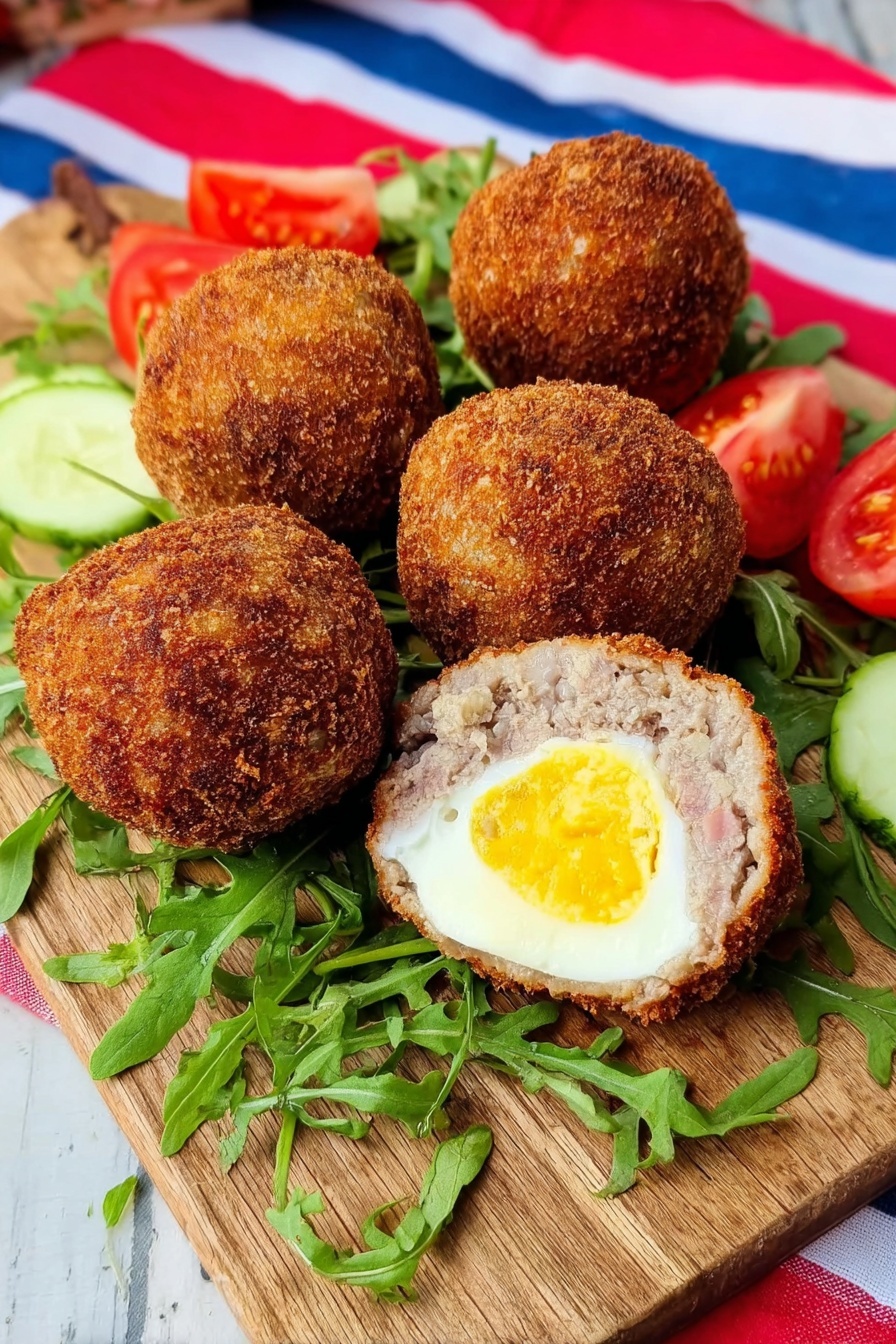
For a brunch or party, I like slicing the Scotch eggs in half and arranging them on a wooden platter with mustard dips and colorful crudités around. You can even skewer mini Scotch eggs with pickles and olives for fun bite-sized appetizers—believe me, they disappear fast!
Make Ahead and Storage
Storing Leftovers
Leftover Scotch eggs store really well in the fridge—just pop them in an airtight container and they’ll keep fresh for up to 2 days. I usually slice them to help cool evenly and prevent sogginess.
Freezing
I’ve frozen these successfully by wrapping each scotch egg tightly in plastic wrap and then foil, placing them in a freezer bag. When you’re ready, thaw overnight in the fridge. The fresh herb flavor holds up nicely.
Reheating
To keep the crust crispy when reheating, I recommend baking the thawed Scotch eggs at 375°F (190°C) for around 15 minutes rather than microwaving. This way, the outside crisps back up without drying out the egg inside.
FAQs
-
Can I use hard-boiled eggs instead of soft-boiled in this Homemade Scotch Eggs with Fresh Herbs Recipe?
Absolutely! Hard-boiled eggs work fine—just boil them for 9-10 minutes until fully set. The texture will be different, more firm throughout, but totally delicious. I personally love the contrast of a slightly soft center, but either way tastes great.
-
What herbs work best in this Homemade Scotch Eggs with Fresh Herbs Recipe?
Chives and thyme are my favorites because they’re subtle but bright; parsley, rosemary, or tarragon also make great alternatives or additions. Stick to fresh herbs for the best flavor.
-
Can I bake these Scotch eggs instead of frying?
Yes, you can bake them for a lighter version. Brush each coated egg with oil and bake at 400°F (200°C) for 25-30 minutes, turning halfway to get an even golden crust.
-
How do I prevent my Scotch eggs from falling apart?
Handling your sausage meat gently yet firmly when wrapping and chilling the wrapped eggs before coating helps a ton. Also, making sure the oil is the right temperature when frying keeps them intact and crispy.
Final Thoughts
I truly believe this Homemade Scotch Eggs with Fresh Herbs Recipe is a game-changer for anyone who’s always wanted to recreate this classic pub favorite at home with a fresh, flavorful twist. From the tender eggs to the aromatic herbs wrapped in seasoned sausage, it’s a crowd-pleaser that’s surprisingly easy to master. So next time you fancy a comforting snack or a beautiful brunch addition, give this recipe a whirl—you’ll be so glad you did, and your friends might just ask you to make it again and again!
Print
Homemade Scotch Eggs with Fresh Herbs Recipe
- Prep Time: 20 minutes
- Cook Time: 7 minutes
- Total Time: 27 minutes
- Yield: 6 Scotch eggs
- Category: Snack
- Method: Frying
- Cuisine: British
Description
A classic British favorite, these homemade Scotch Eggs feature perfectly soft-boiled eggs encased in seasoned sausage meat, coated in a crispy double breadcrumb layer, and fried until golden brown. Ideal for picnics, snacks, or a satisfying appetizer, this recipe offers a delightful combination of textures and flavors.
Ingredients
Eggs
- 8 eggs
Sausage Mixture
- 1 lb (450 g) plain sausage meat
- 3 tbsp chopped mixed herbs (chives and thyme recommended)
- A pinch of ground mace
- 1 tbsp English mustard
Coatings
- 1/2 cup (50 g) flour
- 1 cup (100 g) panko or homemade breadcrumbs
- 2 raw eggs (for egg wash)
- Splash of milk (for mixing with raw eggs)
For Frying
- Vegetable oil (enough to fill pan one third full for deep frying)
Instructions
- Soft-boil the eggs: Place six eggs in a pan and cover them with cold water. Bring to a boil, reduce the heat, and simmer gently for five minutes. Immediately transfer the eggs to a large bowl filled with iced water to cool for at least 10 minutes, which stops the cooking and makes peeling easier.
- Prepare the sausage mixture: In a large bowl, combine the sausage meat, chopped mixed herbs, ground mace, and English mustard. Season with salt and pepper, then mix thoroughly with your hands until all ingredients are well incorporated. Divide the mixture into six equal portions.
- Peel and prepare coating stations: Carefully peel the six soft-boiled eggs. In one bowl, beat the two raw eggs with a splash of milk to create an egg wash. Place the flour in a second bowl, seasoning it lightly. Put the panko or breadcrumbs in a third bowl. Arrange these bowls side by side to create a coating assembly line.
- Shape the sausage around the eggs: Lay a square of clingfilm on your work surface and dust lightly with flour. Place one portion of sausage on the clingfilm and lightly flour the top. Cover with another clingfilm square. Using a rolling pin, gently roll the sausage meat out until it’s large enough to fully encase an egg. Remove the top clingfilm layer.
- Wrap the eggs: Roll one peeled egg in flour and position it in the center of the flattened sausage meat. Using the clingfilm edges, carefully lift and wrap the sausage around the egg, smoothing the meat so it forms a uniform egg shape. Repeat for all eggs.
- Coat the Scotch eggs: Dip each sausage-wrapped egg first in flour, then into the egg wash, followed by breadcrumbs, repeating the egg wash and breadcrumbs steps one more time. This double coating ensures a crispy finish when fried.
- Deep fry the Scotch eggs: Fill a large, deep pan with vegetable oil to about one-third full and heat to 325°F (170°C). You can test readiness by dropping a breadcrumb into the oil; it should sizzle and turn golden without burning. Carefully lower the eggs into the hot oil, frying two at a time to avoid overcrowding. Cook for about seven minutes until the coating is crisp and golden brown.
- Drain and serve: Use a slotted spoon to remove the eggs and place them on kitchen paper to drain excess oil. Serve warm or at room temperature as a delicious snack or part of a savory meal.
Notes
- For perfectly soft-boiled eggs, timing is crucial—do not overcook to maintain a creamy yolk.
- Use clingfilm for shaping the sausage meat to ensure an even and smooth coating without sticking to your hands.
- The double breadcrumb coating creates a wonderfully crunchy exterior.
- Be cautious not to overcrowd the pan when frying; cook in batches to maintain oil temperature and crispiness.
- Leftover Scotch eggs can be served cold and make a great portable snack.
Nutrition
- Serving Size: 1 Scotch egg (approx. 150g)
- Calories: 350 kcal
- Sugar: 1 g
- Sodium: 550 mg
- Fat: 25 g
- Saturated Fat: 9 g
- Unsaturated Fat: 13 g
- Trans Fat: 0 g
- Carbohydrates: 12 g
- Fiber: 1 g
- Protein: 18 g
- Cholesterol: 210 mg


Your email address will not be published. Required fields are marked *