

If you’ve ever craved that perfect plate of crispy, flavorful noodles that just melt in your mouth, you’re going to adore this Cantonese Chow Mein Recipe. I absolutely love how this dish combines crispy pan-fried noodles with savory stir-fried vegetables and a luscious sauce that’s both rich and balanced. When I first tried this recipe, it reminded me of the takeout I used to order but with a homemade freshness that’s unbeatable. Stick around, because I’m going to share all my tips so you can nail it right in your own kitchen!
Why You’ll Love This Recipe
- Authentic Texture: Crisp-edged noodles give you that satisfying crunch every time.
- Simple Ingredients: With pantry staples and fresh veggies, it’s easy to put together any day of the week.
- Flavor-Packed Sauce: A perfect balance of soy, oyster, and a touch of sweetness that brings everything together.
- Quick to Make: Ready in just 15 minutes, this recipe fits well into busy weeknights or last-minute dinners.

Ingredients You’ll Need
The key to this Cantonese Chow Mein Recipe’s success is using fresh, thin egg noodles and layering flavors carefully with aromatics and a rich sauce. I always recommend grabbing Hong Kong style noodles if you can—they crisp up beautifully without getting soggy.

- Chow mein egg noodles: Fresh and thin is best for that ideal texture; dried noodles work too but soak accordingly.
- Yellow onion: Adds sweetness and depth when sautéed just right.
- Green onions: Use both whites for the sauté and greens for garnish; they give that classic flavor punch.
- Bean sprouts: The crunch and mild freshness balance the noodles perfectly.
- Corn oil or neutral oil: Essential for high-heat frying without burning.
- Sesame oil: Just a drizzle at the end brings that comforting, nutty aroma.
- Dark soy sauce: Deep, rich flavor and color for the sauce.
- Regular soy sauce: Adds salty umami without overpowering.
- Oyster sauce: Brings that sweet-salty complexity essential to Cantonese cooking.
- Fish sauce: Just a touch amps umami without making it fishy.
- Granulated sugar: Balances salty and savory notes.
- Water: Helps thin the sauce for perfect coating.
Variations
I love making this Cantonese Chow Mein Recipe my own depending on what’s in the fridge or my mood. Feel free to swap ingredients or add your favorites—you’ll see how super flexible this dish really is.
- Protein Boost: Adding shrimp, chicken, or thinly sliced beef turns this into a hearty main course. My family goes crazy for shrimp versions, especially when tossed right before serving.
- Veggie Swap: Try bell peppers, snow peas, or carrots for extra color and crunch; I’ve found snow peas especially elevate the freshness.
- Gluten-Free: Use rice noodles and tamari sauce to make it gluten-friendly without losing flavor.
- Spicy Kick: A few dashes of chili oil or fresh sliced chilies add a nice heat that wakes up the dish.
How to Make Cantonese Chow Mein Recipe
Step 1: Soften the Noodles
Start by pouring boiling water over your fresh chow mein noodles, just long enough—about 30 seconds to 1 minute—to soften. Don’t over-soak; you want them tender but still slightly firm so they crisp up nicely later. Drain them well and set aside. This quick soak trick ensures your noodles don’t become mushy once in the wok.
Step 2: Whip Up the Signature Sauce
Mix the dark soy sauce, regular soy sauce, oyster sauce, fish sauce, sugar, and water in a small bowl until the sugar dissolves. This combo serves as the backbone to flavor your noodles and veggies. Trust me, balancing salty, sweet, and umami here is key—don’t skip tasting and adjusting if needed.
Step 3: Sauté Your Aromatics
Heat a tablespoon of corn oil in your wok over medium-high heat until it’s shimmering. Toss in the yellow onion slices and white parts of the green onions, cooking just long enough—about a minute—to release their sweet aroma without softening too much. Remove from the wok and set aside; these will fold back in later.
Step 4: Crisp Up the Noodles
Now for the fun part! Add another tablespoon of corn oil to the hot wok, then spread your noodles evenly in a thin layer. Let them sit undisturbed for about 2 minutes to develop a golden crust. Carefully flip them over, drizzle oil around the edges, and cook for another 2 minutes. This is the step that takes your chow mein from blah to brilliant—crispy, yet tender.
Step 5: Combine Everything
Add back your sautéed onions, both the green and white parts of the green onion, bean sprouts, and pour over the sauce. Gently toss to combine without breaking those crispy noodles—about 1 to 2 minutes is perfect. Give it a quick taste and tweak seasonings if it needs a bit more soy or sweetness.
Step 6: Final Touches and Serve
Remove from heat, drizzle the sesame oil over the top, and give it a final gentle toss. The sesame oil adds that finishing aroma that you’ll notice the minute it hits the plate. Serve immediately—you want to enjoy the contrast of textures before the noodles soften. Trust me, it’s magic!
Pro Tips for Making Cantonese Chow Mein Recipe
- Noodle Texture Control: Don’t soak noodles too long initially; slightly under-softened noodles crisp better without sticking.
- Oil Temperature: Heat your wok until the oil just starts to shimmer before frying noodles to ensure crispiness.
- Gentle Tossing: Use a spatula carefully when mixing ingredients with the crispy noodles to keep that coveted crunch intact.
- Fish Sauce Balance: Use fish sauce sparingly; too much can overpower, but just a little amps savory depth beautifully.
How to Serve Cantonese Chow Mein Recipe
Garnishes
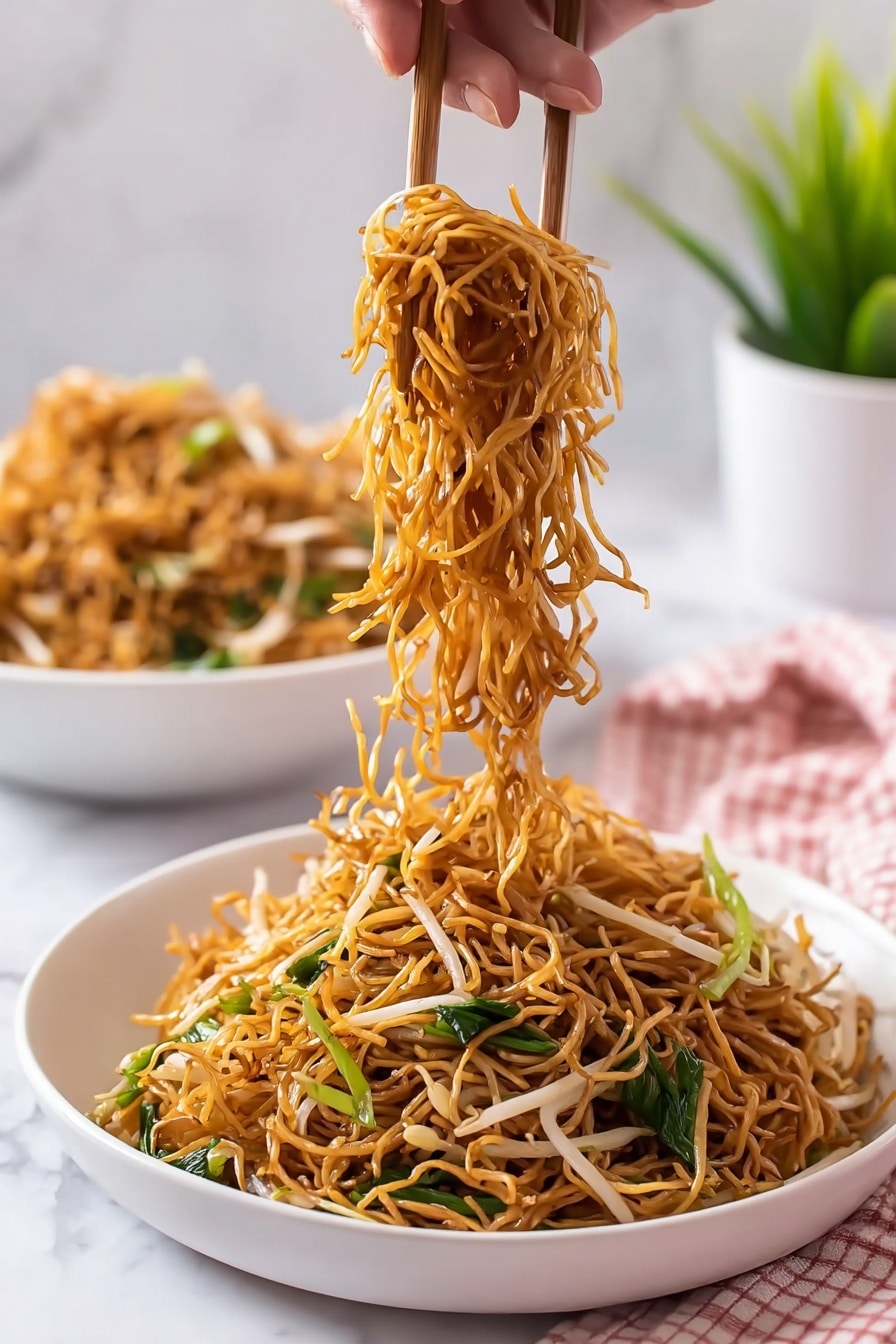
I typically finish with extra sliced green onions for a pop of color and freshness. A sprinkle of toasted sesame seeds adds a nice nutty crunch, and sometimes I like a little chili oil drizzle if I want to spice things up. These little touches make this dish feel restaurant-quality but super approachable.
Side Dishes
This Cantonese Chow Mein Recipe shines on its own but pairs wonderfully with simple sides like steamed bok choy, garlic green beans, or a light cucumber salad. When I do an Asian-themed dinner, I like to add some crispy spring rolls or dim sum for guests to graze on alongside.
Creative Ways to Present
For special occasions, I’ve served the chow mein in individual cast iron skillets right at the table so the noodles stay crispy and sizzling. Garnishing with fresh cilantro and a wedge of lime adds brightness and a little fun. It’s a great conversation starter and looks impressive without extra fuss.
Make Ahead and Storage
Storing Leftovers
I keep leftovers in an airtight container in the fridge for up to 2 days. Because the crispiness does soften, I recommend reheating just what you need to keep the texture enjoyable.
Freezing
I’ve found freezing this dish isn’t ideal since the noodles lose their crispness and become mushy upon thawing. If you want to freeze, omit bean sprouts and add fresh veggies when reheating for best results.
Reheating
To reheat, I warm a little oil in a non-stick pan over medium heat and gently toss the chow mein just enough to heat through and revive some crispness. Microwaving tends to leave it soggy, so stovetop warming works best.
FAQs
-
What noodles are best for Cantonese Chow Mein Recipe?
Fresh, thin egg noodles labeled as Hong Kong style chow mein noodles are ideal—they crisp well and maintain texture without becoming soggy. If you can’t find fresh, use dried but soak them briefly in boiling water before cooking.
-
Can I make Cantonese Chow Mein Recipe vegetarian?
Absolutely! Omit fish sauce or substitute with vegetarian alternatives and use mushroom or vegetarian oyster sauce to keep the deep umami flavors without any animal products.
-
How do I keep the noodles crispy without burning?
Use medium-high heat and spread noodles evenly in the pan without overcrowding. Let them cook undisturbed until golden before flipping. Additional oil around the edges helps crisp without burning.
-
Can I prepare components ahead of time?
Yes! You can prep veggies, sauce, and soak noodles in advance. Crisping the noodles and combining everything is best done last-minute for optimal texture.
Final Thoughts
I truly believe this Cantonese Chow Mein Recipe is one of those home-cooked dishes that impresses without complication. Every time I make it, whether for a quick lunch or dinner with friends, it brings smiles and requests for seconds. I hope you’ll give it a try and experience that perfect balance of crunch, savory sauce, and fresh veggies that I fell in love with. Happy cooking—and enjoy that first crunchy bite!
Print
Cantonese Chow Mein Recipe
- Prep Time: 5 minutes
- Cook Time: 10 minutes
- Total Time: 15 minutes
- Yield: 2 servings
- Category: Main Dish
- Method: Frying
- Cuisine: Chinese
Description
This Cantonese Chow Mein recipe delivers a perfect balance of crispy egg noodles tossed with fresh vegetables and a savory stir-fry sauce, offering a quick and delicious homemade take on a classic Chinese favorite.
Ingredients
Noodles and Vegetables
- 12 oz chow mein egg noodles (thin fresh noodles, Hong-Kong style)
- ½ small yellow onion, thinly sliced
- 5 stalks green onions, cut into 2-inch pieces (whites and greens divided)
- 2 cups bean sprouts
- 3 tablespoons corn oil or any neutral oil
- 1 teaspoon sesame oil (to finish)
Stir Fry Sauce
- 2 tablespoons dark soy sauce
- 1 tablespoon regular soy sauce
- 1 tablespoon oyster sauce
- ½ teaspoon fish sauce
- 1 tablespoon granulated sugar
- 1 tablespoon water
Instructions
- Cook the noodles: Pour boiling water over the chow mein egg noodles and soak for 30 seconds to 1 minute until softened. Drain thoroughly and set aside.
- Make the sauce: In a small bowl, combine dark soy sauce, regular soy sauce, oyster sauce, fish sauce, sugar, and water. Stir until the sugar dissolves completely.
- Sauté aromatics: Heat 1 tablespoon of corn oil in a wok over medium-high heat until hot. Add the yellow onion slices and the white parts of the green onions. Sauté them for about 1 minute until fragrant but not browned. Remove from the wok and set aside.
- Pan-fry the noodles: Add another tablespoon of corn oil to the hot wok. Spread the noodles into a thin, even layer to allow them to crisp up for about 2 minutes. Flip the noodles carefully, pour the remaining tablespoon of corn oil around the edges of the wok, and continue frying for another 2 minutes until the noodles develop a crispy texture.
- Add the vegetables and sauce: Return the sautéed onions and add the remaining green parts of the green onions, the bean sprouts, and the prepared stir-fry sauce to the wok. Gently toss everything together and cook for 1 to 2 minutes to combine the flavors. Taste and adjust seasoning if needed.
- Serve: Remove the wok from heat, drizzle the sesame oil over the chow mein, and toss gently to incorporate. Serve immediately while hot and crispy.
Notes
- Use fresh Hong-Kong style chow mein noodles for the best texture, but thin dried noodles can be a substitute if softened properly.
- Be careful not to burn the onions when sautéing; they should be soft and fragrant.
- When pan-frying, spread the noodles in a thin layer to maximize crispiness.
- Adjust the amount of soy and fish sauce to your taste preferences or dietary needs.
- Serve immediately to enjoy the noodles at their crispiest.
Nutrition
- Serving Size: 1 serving
- Calories: 350 kcal
- Sugar: 5 g
- Sodium: 900 mg
- Fat: 14 g
- Saturated Fat: 2 g
- Unsaturated Fat: 10 g
- Trans Fat: 0 g
- Carbohydrates: 45 g
- Fiber: 3 g
- Protein: 10 g
- Cholesterol: 0 mg


Your email address will not be published. Required fields are marked *