

If you’ve ever wandered through a Korean market or sat at a street food stall in Seoul, you might have come across Korean Blood Sausage (Sundae) Recipe—a dish that absolutely steals the show with its unique textures and savory flavors. I absolutely love this recipe because it’s a homemade version of a beloved classic that’s surprisingly approachable once you break it down. Keep reading, and I’ll walk you through every step so you can make this fan-freaking-tastic Korean delicacy right in your own kitchen.
Why You’ll Love This Recipe
- Authentic Flavor: This recipe captures the traditional taste of Korean blood sausage with just the right balance of herbal, nutty, and savory notes.
- Beginner Friendly: I used to think making sundae at home was complicated—until I broke it into simple, manageable steps for you.
- Perfect Texture: Achieve the classic chewiness with a fluffy yet filling rice and vermicelli stuffing that’s not too tight or too loose.
- Fun Cultural Experience: Making sundae is like inviting a piece of Korean street food culture right into your kitchen—it’s a real conversation starter!

Ingredients You’ll Need
Each ingredient in this Korean Blood Sausage (Sundae) Recipe contributes a piece of the authentic flavor and texture that makes this dish stand out. When you shop for ingredients, aim for freshness—especially with the pork intestines and scallions—as they make a world of difference.
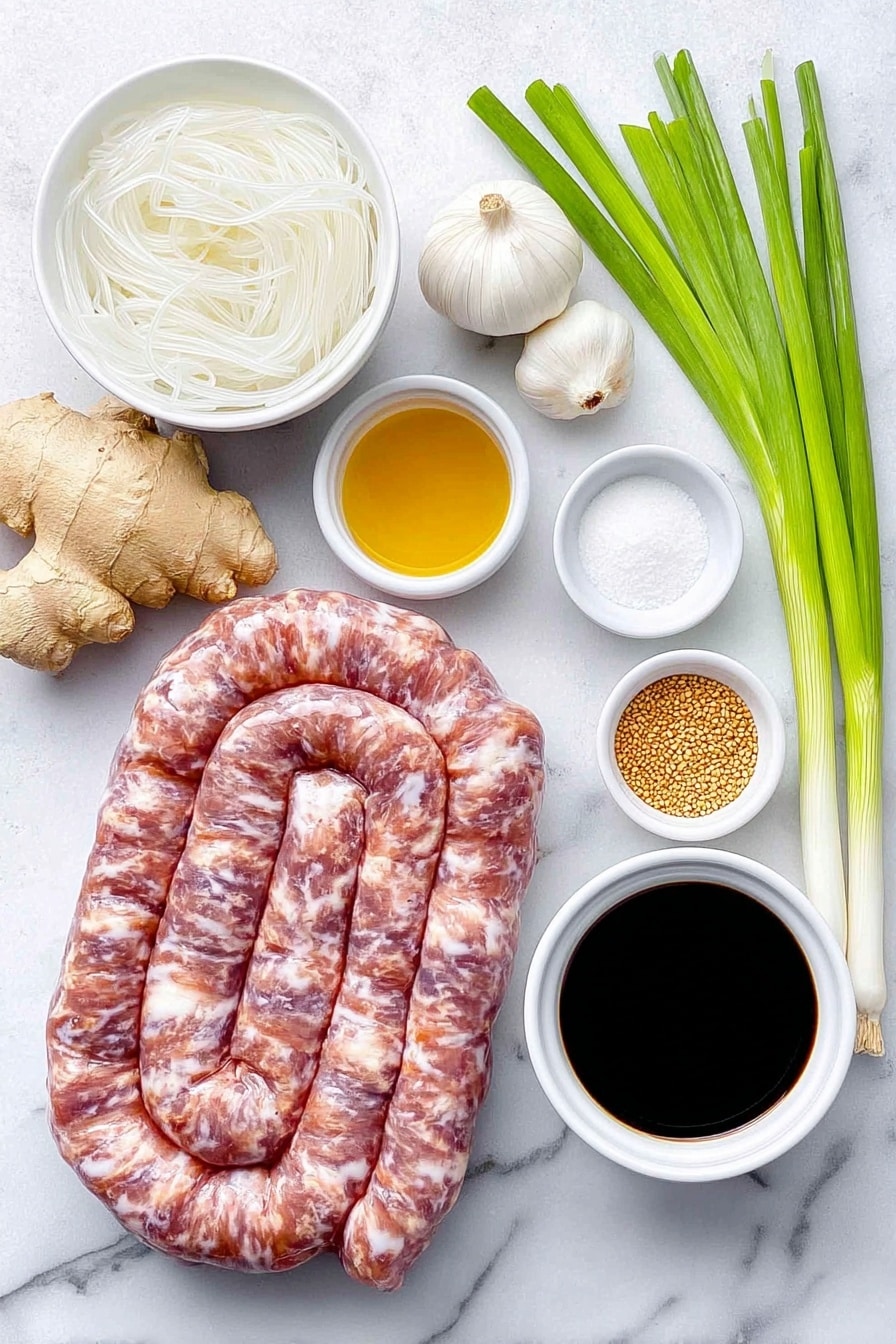
- Pork small intestine: Fresh and thoroughly cleaned intestines are essential for the casing – be patient when prepping them!
- Sweet rice: This sticky rice binds the sausage filling together beautifully, creating the perfect chew.
- Sweet potato starch vermicelli: Adds a delightful springy bite and soaks up flavors wonderfully.
- Garlic cloves: Fresh garlic gives that classic pungent kick unique to sundae.
- Fresh ginger knob: Adds warmth and subtle spice without overpowering.
- Salt & pepper: Classic seasonings; I recommend using fine sea salt for best results.
- Korean toasted sesame oil: This nutty oil really elevates the stuffing’s aroma.
- Sesame seeds: Toasted to bring out their nuttiness before mixing into the filling.
- Scallions: Fresh and finely chopped for a mild onion flavor and color contrast.
- Beef or pork blood: The soul of sundae, bringing depth, richness, and that signature dark red color.
Variations
One of the best things about the Korean Blood Sausage (Sundae) Recipe is how you can tweak it to make it your own. Over time, I’ve swapped out ingredients and tried different approaches that keep the spirit of the dish but add a personal twist.
- Vegetarian Version: Though traditional sundae uses blood, I once made a version using cooked mushrooms and tofu for the stuffing; it was surprisingly satisfying and great for veggie friends.
- Spicy Kick: Adding gochugaru (Korean chili flakes) into the filling gave my sundae a lovely heat that my family loved on cold nights.
- Herbal Infusion: I sometimes add finely chopped fresh perilla leaves for a fragrant herbal touch that brightens the filling.
- Using Beef Blood: I’ve tried both pork and beef blood, and each lends a slightly different flavor depth, so experiment with whichever you find freshest.
How to Make Korean Blood Sausage (Sundae) Recipe
Step 1: Soak and Prep the Sweet Rice
Start by soaking the sweet rice in enough water to cover it well. I like to soak it for about 30 minutes and rinse it repeatedly until the water runs clear. This helps remove excess starch, which keeps the rice from becoming gummy inside the sausage—trust me, it makes a difference in texture!
Step 2: Cook the Rice to Perfect Fluffiness
Once soaked, cook the rice with slightly less water than usual—about 1/4 cup less than standard instructions. If you have a rice cooker, use that for ease. Otherwise, simmer on the stovetop over low heat, covered, for about 45 minutes. After cooking, fluff it gently with a fork and let it cool slightly. This step is crucial so the rice stuffing isn’t mushy but still sticks together nicely.
Step 3: Clean and Prepare the Pork Intestine
Now for the part that intimidated me most the first time—I cleaned the pork intestines thoroughly with warm water, rinsing from end to end. Then I soaked them in a very light saltwater solution for about an hour to remove any lingering odors. This not only makes the casing safer but also improves the taste. Don’t rush this step—patience is key here!
Step 4: Prepare the Filling Mix
While the intestines soak, soak your sweet potato starch vermicelli noodles in lukewarm water until they soften, then roughly chop them. Finely chop the scallions, and toast the sesame seeds in a pan over medium heat until golden—don’t skip toasting; it really amps up flavor. Using a mortar and pestle to crush the seeds gives a rustic, authentic texture. Finally, mix garlic, ginger, sesame seeds, scallions, cooked rice, vermicelli, beef or pork blood, sesame oil, salt, and pepper in a large bowl until everything is well combined.
Step 5: Stuff the Intestines Carefully
Use a funnel or sausage stuffing machine to fill the intestines, but be gentle—stuffing too tightly will cause them to burst during cooking. I tie off one end with cotton string before stuffing, then carefully fill, leaving room for expansion. Once filled, tie off the other end securely. This part feels a bit like a craft project, but it’s so rewarding when you see those plump, homemade sausages ready to cook!
Step 6: Simmer to Cook Perfection
Place the stuffed sausages in a large pot and cover with salted water (about 1 teaspoon salt per quart). Bring to a boil, then reduce heat and simmer uncovered for around 45 minutes. This slow simmer cooks the filling through without bursting the casing. To check doneness, insert a toothpick or skewer into the sausage center – if it comes out clean, you’re set! Let your sundae rest a little before slicing.
Pro Tips for Making Korean Blood Sausage (Sundae) Recipe
- Gentle Stuffing: I learned the hard way that overstuffing bursts the casing—take it slow and leave some breathing space for the filling.
- Intestine Prep is Key: Soaking and rinsing the intestines multiple times removes any off smells and improves the final dish immensely.
- Flavor Boost with Toasted Sesame: Toast sesame seeds until golden—you’ll get that irresistible nutty aroma that ties everything together.
- Simmer Don’t Boil: Keeping the pot uncovered and simmering gently prevents bursting and keeps the sausage firm but tender.
How to Serve Korean Blood Sausage (Sundae) Recipe

Garnishes
I love serving my sundae with a simple mix of salt and pepper paired with some spicy gochujang on the side for dipping—it’s classic and adds just the right amount of heat. Thinly sliced fresh scallions or a sprinkle of toasted sesame seeds on top give a nice fresh crunch and color pop.
Side Dishes
My family goes crazy for pairing sundae with tteokbokki (spicy rice cakes) or a tangy kimchi salad to cut through the richness. If you want a lighter balance, steamed or pickled vegetables work beautifully too.
Creative Ways to Present
For holidays or gatherings, I like slicing sundae into bite-sized rounds and arranging them on a platter with colorful dipping bowls filled with different sauces like soy-vinegar, mustard, or chili paste. It turns an everyday snack into a festive appetizer that guests can’t stop chatting about.
Make Ahead and Storage
Storing Leftovers
After enjoying fresh sundae, wrap any leftovers tightly in plastic wrap and store in the refrigerator for up to 3 days. I find that keeping it wrapped airtight prevents drying out and preserves its juicy texture.
Freezing
You can freeze cooked sundae by wrapping it tightly in foil and placing it in an airtight container or freezer bag. From my experience, freezing works great and lets you enjoy this comfort food anytime; just thaw overnight in the fridge before reheating.
Reheating
The best way to reheat leftover sundae is by steaming it gently or warming it on low heat in a covered pan with a little water. Microwaving works in a pinch, but the sausage keeps its texture best when reheated slowly to avoid drying out.
FAQs
-
What is Korean blood sausage (sundae)?
Sundae is a traditional Korean dish featuring pork or beef blood mixed with rice, noodles, and seasonings, all stuffed into cleaned pork intestines. It’s a popular street food enjoyed with savory dipping sauces.
-
Can I make sundae without pork intestines?
While pork intestines are traditional as casings, some home cooks use synthetic sausage casings or even foil molds, but the authentic texture and flavor come best with real intestines.
-
Is the blood difficult to find?
Depending on where you live, beef or pork blood might be available at specialty Asian markets or butcher shops. If unavailable, contact local Korean markets or ask your butcher in advance.
-
How do I avoid the intestines bursting during cooking?
Stuff the intestines gently, leaving enough room for the filling to expand, and simmer gently without boiling vigorously. Also, don’t cover the pot so steam can escape.
-
Can I prepare the sundae filling ahead of time?
Yes! You can prepare the filling mixture a few hours ahead and keep it chilled. Just stuff and cook the sausages fresh for the best texture.
Final Thoughts
Honestly, discovering how approachable making Korean Blood Sausage (Sundae) Recipe at home could be was a game-changer for me. It’s a dish bursting with tradition, flavor, and heartiness that brought my family closer around the dinner table. If you’re curious about Korean cuisine or just want to try something different and delicious, give this recipe a shot—you’ll enjoy the process as much as the outcome. Plus, it’s a rewarding culinary adventure that’s as fun to make as it is to share!
Print
Korean Blood Sausage (Sundae) Recipe
- Prep Time: 45 minutes
- Cook Time: 1 hour 15 minutes
- Total Time: 2 hours
- Yield: 4-6 servings
- Category: Main Dish
- Method: Stovetop
- Cuisine: Korean
Description
Korean Blood Sausage, known as Sundae, is a traditional Korean delicacy featuring pork small intestine stuffed with a flavorful mixture of sweet rice, sweet potato starch vermicelli, garlic, ginger, and beef or pork blood. This recipe guides you through the careful cleaning, stuffing, and simmering process to create a savory sausage that is perfect served warm with salt, pepper, and spicy gochujang for dipping.
Ingredients
For the Intestine:
- 3 feet pork small intestine
For the Stuffing:
- 2 cups sweet rice
- 1/2 12-ounce package sweet potato starch vermicelli (about 6 ounces)
- 3 garlic cloves
- 1 1/2-inch knob fresh ginger
- 1 teaspoon salt
- 1/2 teaspoon pepper
- 1 tablespoon Korean toasted sesame oil
- 1 teaspoon sesame seeds
- 5 scallions
- 2 cups beef or pork blood
For Cooking:
- Salt-water solution (1 teaspoon salt per quart of water) for boiling
- Cotton string for tying sausages
Instructions
- Soak and Rinse Rice: Place 2 cups of sweet rice in a medium bowl and cover it completely with water. Soak for about 30 minutes. Rinse repeatedly with cold water until the water runs clear, removing excess starch.
- Cook Rice: Using a rice cooker, cook the rice with 1/4 cup less water than the standard amount. Alternatively, bring 2 cups rice to a boil in 3 1/2 cups water on the stovetop, then reduce heat to low, cover, and simmer for 45 minutes. After cooking, fluff the rice with a fork and let it cool slightly.
- Clean the Intestine: Thoroughly clean the pork intestine by rinsing through one end with slightly warm water and gently squeezing from the other end. Then wash with cold water and soak in a saline solution (a pinch of salt in water) for 1 hour to further purify.
- Prepare the Intestine for Stuffing: Cut the intestine into 1-foot sections if preferred or keep whole. Tie one end of each section securely with cotton string.
- Prepare Vermicelli and Vegetables: Soak the sweet potato starch vermicelli in lukewarm water until soft, then roughly chop. Finely chop scallions. Dry toast sesame seeds over medium-high heat until golden, then crush them using a mortar and pestle.
- Make Stuffing Mixture: In a large mixing bowl, combine cooked rice, chopped vermicelli, minced garlic, grated fresh ginger, toasted crushed sesame seeds, salt, pepper, Korean toasted sesame oil, chopped scallions, and beef or pork blood. Mix thoroughly to incorporate all ingredients evenly.
- Stuff the Intestine: Using a funnel or sausage stuffing machine, lightly fill each intestine section with the stuffing mixture. Avoid packing too tightly to prevent cracking during cooking. Tie off the open end of each sausage securely with cotton string.
- Cook the Sausages: Place the stuffed sausages in a pot and cover them with a salt-water solution (1 teaspoon salt per quart of water). Bring to a boil over medium-high heat, then reduce to a simmer without covering. Simmer gently for about 45 minutes to ensure thorough cooking.
- Check for Doneness: Insert a toothpick or skewer into the sausage; if it comes out clean, the sausage is fully cooked and safe to eat.
- Serve: Remove cotton strings, slice the sausage, and serve warm. Accompany with a mixture of salt and pepper, and spicy gochujang for dipping to enhance the flavors.
Notes
- Do not overstuff the intestines to avoid bursting during simmering.
- Make sure to clean the intestines thoroughly to eliminate any unpleasant odors.
- Toasting sesame seeds enhances their nutty flavor—do not skip this step.
- Keep an eye on the simmering to maintain a gentle boil and prevent the sausages from bursting.
- Gochujang is a traditional Korean chili paste; it adds depth and heat when used as a dipping sauce.
- Sundae is best enjoyed fresh and warm but can be refrigerated and lightly steamed or reheated before serving.
Nutrition
- Serving Size: 1 sausage (approx. 150g)
- Calories: 250
- Sugar: 1g
- Sodium: 450mg
- Fat: 8g
- Saturated Fat: 2.5g
- Unsaturated Fat: 4g
- Trans Fat: 0g
- Carbohydrates: 30g
- Fiber: 2g
- Protein: 15g
- Cholesterol: 60mg


Your email address will not be published. Required fields are marked *