
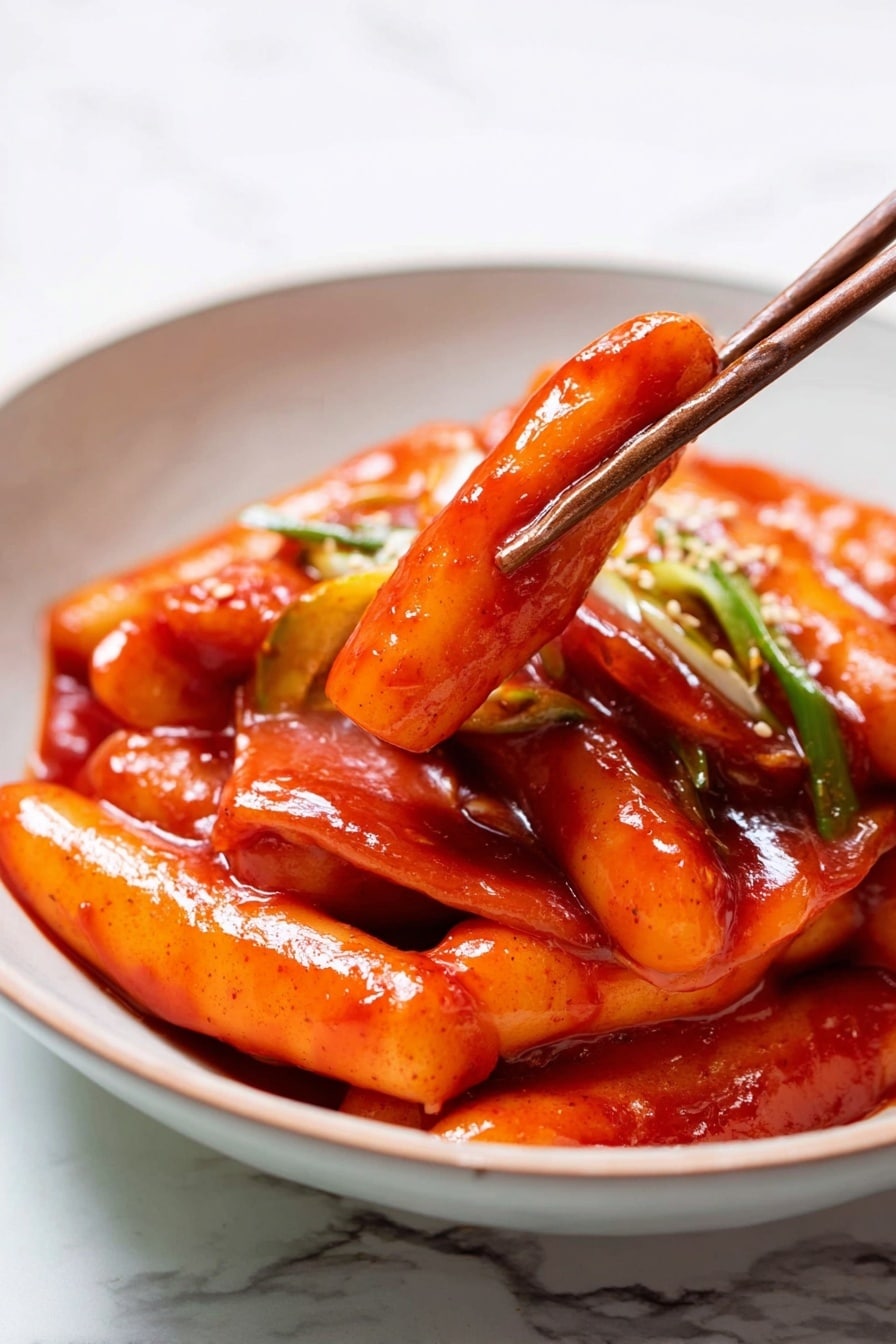
If you’re craving something fiery, chewy, and utterly addictive, then you’re in for a treat with this Spicy Tteokbokki Rice Cakes Recipe. I absolutely love how this dish brings together tender rice cakes swimming in a sauce that’s sweet, spicy, and packed with umami goodness. When I first tried making tteokbokki at home, I struggled to get that perfect balance of spice and sweetness, but once I found this recipe, it quickly became a family favorite and a go-to comfort meal. Stick around, because I’m sharing all my insider tips to help you master this Korean street food classic!
Why You’ll Love This Recipe
- Authentic Flavor: The anchovy broth and gochujang combine to give a rich, traditional taste that pops with every bite.
- Perfectly Chewy Rice Cakes: Using fresh or properly soaked rice cakes ensures that delightfully chewy texture everyone raves about.
- Customizable Heat Level: You control the spice with gochugaru adjustments so it suits your palate—mild or fiery!
- Simple Ingredients: Mostly pantry staples with a few Korean market finds—easy to make any day of the week.

Ingredients You’ll Need
The beauty of this Spicy Tteokbokki Rice Cakes Recipe is in its straightforward ingredients list. Each component works like a puzzle piece—anchovy broth for depth, gochujang and gochugaru for that spicy kick, and fresh rice cakes for texture. Shopping tip: grab fresh rice cakes if you spot them at your local Korean grocery, but don’t worry if you only find refrigerated or frozen ones—they work great too with a bit of soaking time.
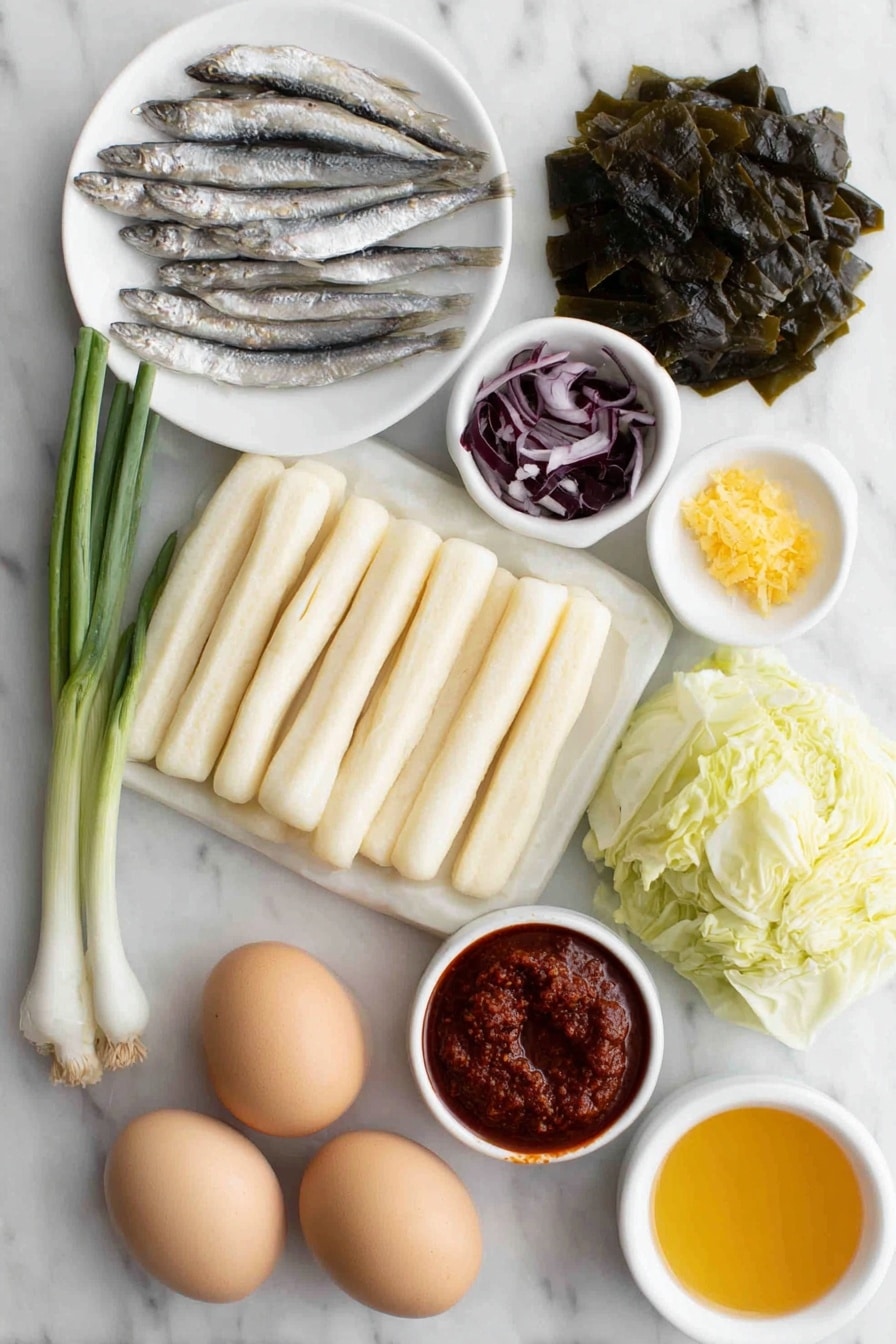
- Tteokbokki rice cakes: Fresh is best for chewiness, but soaked refrigerated or frozen ones are perfectly fine.
- Fish cake (eomuk): Adds a lovely savory texture and soaks up the sauce beautifully.
- Green cabbage: Gives a fresh crunch that balances the spicy sauce.
- Scallions: Provide a bright, mild onion flavor towards the end of cooking.
- Minced garlic: Infuses a fragrant warmth into the sauce.
- Dried anchovies and kelp (dasima): Essential for creating the super flavorful broth base.
- Onion: Add sweetness and body to the broth.
- Gochujang (Korean red chili paste): The star ingredient delivering spicy, savory, and slightly sweet notes.
- Gochugaru (Korean chili flakes): Controls the heat level; finely ground works best for even blending.
- Soy sauce: Adds depth and umami.
- Sugar and corn syrup (or oligosaccharide syrup): Balances the heat with sweetness and silkiness.
- Boiled eggs (optional): My family and I love adding eggs for an extra hit of protein and texture.
Variations
I love that this recipe is like a canvas—once you get the base right, you can easily tweak it to suit your mood or what’s in the fridge. I’ve played with this recipe often, and each variation brings its own special vibe.
- Extra Cheesy Twist: Adding a handful of shredded mozzarella right at the end gives a melty, gooey surprise that my kids can’t get enough of.
- Seafood Boost: Toss in some shrimp or squid for a seafood tteokbokki variation that’s extra flavorful and filling.
- Vegetarian Version: Skip the anchovies and fish cakes, use vegetable broth, and add mushrooms or tofu for a hearty vegetarian option.
- Spice Adjustment: If you’re new to Korean spice, start with less gochugaru and gradually increase as you get comfortable with the heat.
How to Make Spicy Tteokbokki Rice Cakes Recipe
Step 1: Prep Your Ingredients
Start by soaking your rice cakes in cold water for about 20 minutes. This softens them up, especially if they’re refrigerated or frozen. Meanwhile, slice your fish cakes, cabbage, and scallions into roughly 2-inch pieces. I like to mince my garlic finely so it blends into the sauce without being overpowering.
Step 2: Make the Anchovy Broth
Grab a large pan and add your dried anchovies, dried kelp (dasima), and roughly sliced onion with 5 cups of water. Bring it to a boil over medium-high heat, then reduce to medium and simmer for about 10 minutes. This broth is magical—it gives that deep umami flavor that’s key to an authentic tteokbokki. Once done, strain out the solids and keep the broth warm.
Step 3: Whisk Together the Sauce
In the same pan with the warm anchovy broth, stir in gochujang, gochugaru, soy sauce, sugar, and corn syrup. Stir until the gochujang fully dissolves into the broth, creating a vibrant, spicy base. This is where your kitchen starts to fill with that irresistible aroma!
Step 4: Cook the Rice Cakes
Add your soaked rice cakes to the spicy broth, and let them boil gently for about 8 to 10 minutes. You’ll want to stir frequently—this prevents sticking and helps the sauces thicken evenly. Watch for that texture change: the rice cakes should turn soft and chewy but not mushy. I’ve found timing is key here depending on the type of rice cake you use.
Step 5: Add Vegetables and Finish Cooking
Drop in the cabbage, fish cakes, and minced garlic. Let everything cook together for another 4 to 6 minutes. If you like your rice cakes extra tender, don’t hesitate to extend this time a bit, adding more broth or water to keep it saucy. Toss in the scallions and boiled eggs with a couple minutes left. Then taste and adjust seasoning if you need a touch more sweetness or spice. Serve piping hot for the best experience.
Pro Tips for Making Spicy Tteokbokki Rice Cakes Recipe
- Soak the Rice Cakes Properly: I used to skip soaking refrigerated rice cakes and ended up with rock-hard bites—never again!
- Stir Often: This prevents the rice cakes from sticking and helps the sauce thicken evenly—your watchful eye makes all the difference.
- Fine-Ground Gochugaru: Grinding your chili flakes finer helps the sauce blend smoothly and evenly, avoiding any gritty texture.
- Resist Overcooking: Soft is good, but mushy isn’t—stop cooking as soon as the rice cakes are tender and chewy, not falling apart.
How to Serve Spicy Tteokbokki Rice Cakes Recipe
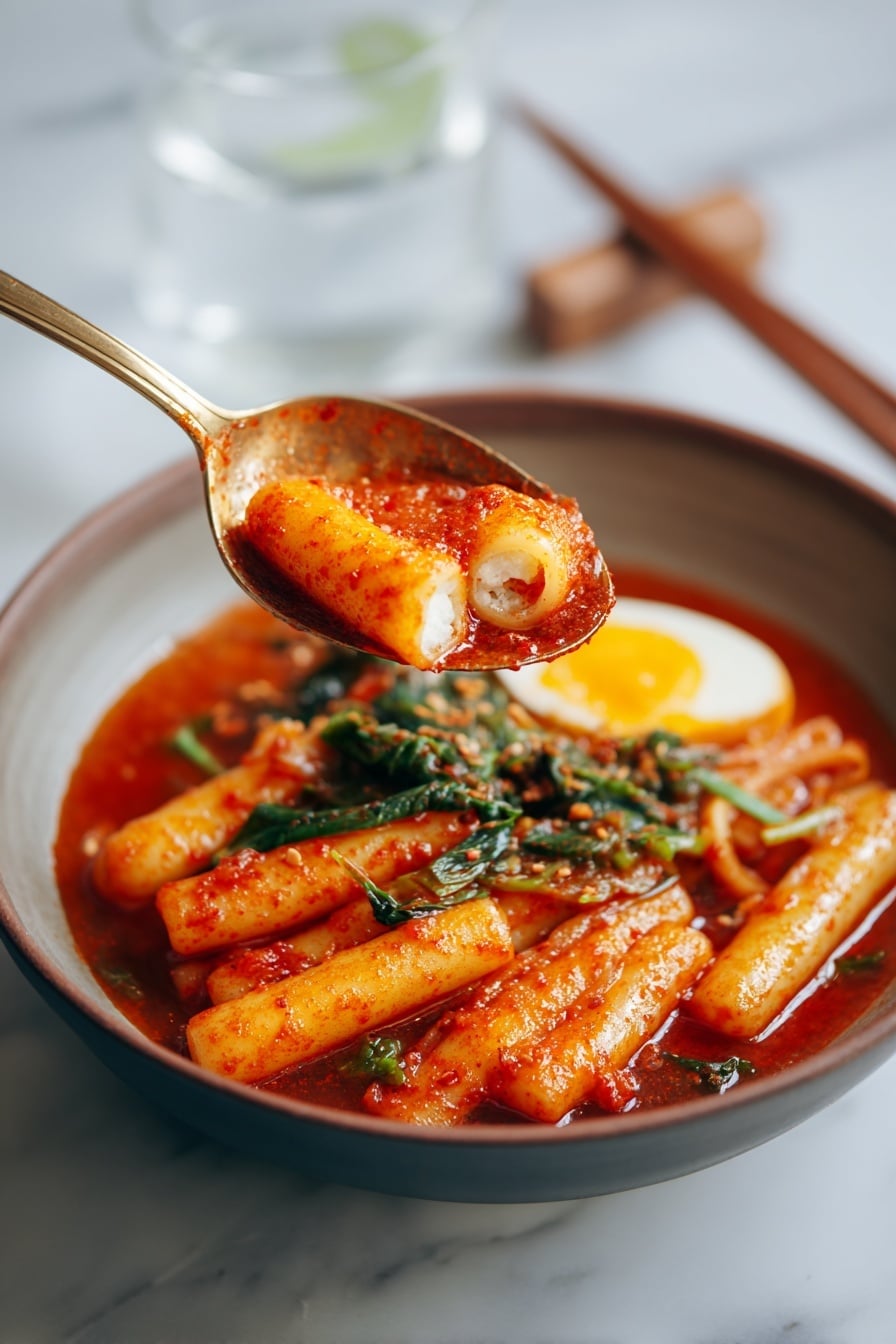
Garnishes
I usually sprinkle toasted sesame seeds and sliced green onions on top right before serving—it adds a little crunch and freshness that balances the spicy sauce perfectly. Sometimes, a drizzle of sesame oil straight from the bottle can take it to another level of aroma. Trust me, these little touches make your presentation as delicious as the taste.
Side Dishes
When I serve tteokbokki, I love pairing it with simple sides like steamed rice to soak up extra sauce or a crisp kimchi salad that adds a refreshing tang. If you’re feeling adventurous, crispy fried dumplings or japchae (stir-fried glass noodles) make fantastic companions.
Creative Ways to Present
For a fun party twist, try serving tteokbokki in small individual bowls topped with a halved boiled egg and a sprinkle of chopped scallions—makes it perfect for sharing. Another time, I layered it over a bed of crispy ramen noodles, which gave it this awesome crunchy-sof texture contrast that wowed my guests.
Make Ahead and Storage
Storing Leftovers
If you have leftovers (which sometimes doesn’t happen at my house), store them in an airtight container in the fridge for up to 2 days. The rice cakes will firm up a bit, but don’t worry—we’ve got tips for reheating below to bring them back to life.
Freezing
I don’t usually freeze tteokbokki because the texture of the rice cakes can change, becoming too soft when reheated. However, if you must, freeze in portions without the rice cakes and add them fresh when reheating.
Reheating
Reheating tteokbokki in the microwave tends to toughen the rice cakes, so I recommend reheating leftovers gently in a small pan on low heat with a splash of water or broth. Stir often until warmed through and the sauce is luscious again.
FAQs
-
Can I make Spicy Tteokbokki Rice Cakes Recipe without anchovy broth?
Absolutely! While anchovy broth adds authentic depth, you can substitute with vegetable or chicken broth for a milder taste. Just keep in mind the flavor will be less savory but still delicious.
-
How spicy is this recipe, and can I adjust the heat?
This recipe offers a medium level of heat that can be easily adjusted by varying the amount of gochugaru (Korean chili flakes). Start with less if you prefer milder food and add more until it hits your sweet spot.
-
What if I can’t find traditional fish cakes?
It’s okay to swap fish cakes with other proteins like thinly sliced sausage, tofu, or even omit them. Each variation will change the texture slightly, but the sauce remains the star.
-
Can I make this recipe vegan?
Yes! Skip anchovies and fish cakes, use vegetable broth, and make sure your gochujang contains no animal products (some brands do). Load up on mushrooms and veggies for extra umami.
-
How do I store and reheat leftovers without losing texture?
Store leftovers in an airtight container in the fridge for up to 2 days. Reheat slowly on the stove with a little broth or water, stirring frequently to prevent sticking and to restore the sauce’s creaminess without toughening the rice cakes.
Final Thoughts
This Spicy Tteokbokki Rice Cakes Recipe has a special place in my kitchen—and my heart. It’s a dish that brings comfort, a little heat, and a whole lot of fun to eat with those perfectly chewy rice cakes soaked in spicy-sweet love. Whether you’re cooking it for a quick weeknight dinner or impressing friends with some Korean comfort food, I promise you’ll find it hits the spot every time. So, grab your rice cakes, turn up the heat, and enjoy every saucy bite as if I were right there cooking with you!
Print
Spicy Tteokbokki Rice Cakes Recipe
- Prep Time: 20 minutes
- Cook Time: 20 minutes
- Total Time: 40 minutes
- Yield: 3 servings
- Category: Main Dish
- Method: Stovetop
- Cuisine: Korean
Description
Tteokbokki is a beloved Korean dish featuring chewy stir-fried rice cakes cooked in a spicy, savory red chili pepper sauce made with gochujang and gochugaru. This recipe incorporates fish cakes, cabbage, scallions, and aromatic anchovy broth to create a flavorful and hearty street food experience perfect for sharing.
Ingredients
Main Ingredients
- 1 pound tteokbokki tteok 떡볶이 떡 (about 24 pieces, 3-inch long rice cakes)
- 1-2 eomuk 어묵 (fish cake) sheets
- 4 ounces green cabbage (yangbaechu, 양배추)
- 1-2 scallions
- 1 tablespoon minced garlic
Broth Ingredients
- 8-10 medium to large dried anchovies (마른멸치), about 0.5 ounces (15 grams)
- 1 piece dasima (dried kelp), about 3-inch square
- 1/4 medium onion, roughly sliced
- 5 cups water
Sauce Ingredients
- 3 tablespoons gochujang, 고추장
- 1-3 teaspoons finely ground gochugaru, 고추가루
- 1 tablespoon soy sauce
- 2 tablespoons sugar (or 1 tablespoon for less sweet)
- 1 tablespoon corn syrup (or oligo syrup; increase sugar if not using corn syrup)
Optional
- 2 boiled eggs
Instructions
- Soak the rice cakes: Soak the rice cakes in water for about 20 minutes to soften, especially if they are refrigerated or frozen.
- Prepare the vegetables and fish cakes: Cut the fish cake sheets, cabbage, and scallions into 2-inch long pieces for even cooking and easy eating.
- Make the anchovy broth: In a large pan, combine dried anchovies, dried kelp (dasima), and sliced onion with 5 cups of water. Bring to a boil over medium-high heat and simmer for 10 minutes. Reduce heat if necessary to maintain a gentle boil. Remove anchovies, kelp, and onion from the broth once done to keep the broth clear and flavorful.
- Add sauce ingredients: Add gochujang, gochugaru, soy sauce, sugar, and corn syrup into the broth. Stir well to thoroughly dissolve the gochujang into the liquid, creating a smooth, spicy sauce base.
- Cook the rice cakes: Add the soaked rice cakes into the sauce. Boil them until they become very soft and the sauce thickens, about 8 to 10 minutes. Stir frequently to prevent sticking to the bottom of the pan.
- Incorporate vegetables and fish cakes: Drop in the chopped cabbage, fish cakes, and minced garlic. Continue to boil and stir occasionally for another 4 to 6 minutes, adjusting cooking time based on the softness of the rice cakes. Add more broth or water if the sauce becomes too thick.
- Add finishing touches: With 2 to 3 minutes left, add the scallions and optional boiled eggs. Taste the sauce and adjust seasoning if necessary. Serve the tteokbokki hot for the best flavor and texture.
Notes
- You can find tteokbokki rice cakes fresh, refrigerated, or frozen at Korean markets. Use fresh rice cakes if available for the best texture.
- For a cleaner and spicier sauce, try 2 tablespoons gochujang, 2 tablespoons finely ground gochugaru, and 1.5 tablespoons soy sauce as an alternative mix.
- Finely ground gochugaru works better in this recipe; grind regular gochugaru in a spice grinder or sift it to achieve a fine powder.
- Tteokbokki does not reheat well in the microwave. Reheat leftovers gently on the stovetop with a little broth or water to prevent drying and sticking.
Nutrition
- Serving Size: 1 cup (approx. 180g)
- Calories: 320
- Sugar: 10g
- Sodium: 900mg
- Fat: 4g
- Saturated Fat: 0.5g
- Unsaturated Fat: 3g
- Trans Fat: 0g
- Carbohydrates: 65g
- Fiber: 3g
- Protein: 8g
- Cholesterol: 15mg


Your email address will not be published. Required fields are marked *